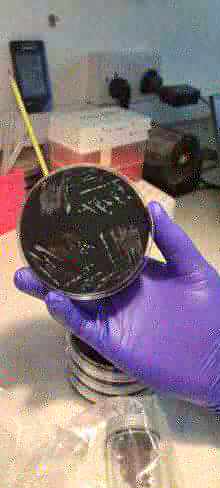
Early culture work during the first weeks of CCC sampling in The Gambia, September 2026.
Recruitment for the Campylobacter Control Campaign has begun in The Gambia. The first diarrhoea case was enrolled on 31 August, marking the start of a field and laboratory workflow designed to study transmission across people, animals and the household environment.
Progress was rapid. By 4 September, five cases had been enrolled with complete four-specimen sample sets, producing 20 human specimens. Community animal sampling had also started, with 32 animals contributing 64 specimens.
Three weeks into recruitment
By the 25 September site report, 53 children had been screened and 41 met the eligibility criteria. Twenty-eight children with diarrhoea had been enrolled, alongside 10 community children and 12 household members. Across these human cohorts, 148 specimens had been collected for culture, PCR, archiving and downstream analysis.
Building the One Health picture
Sampling is expanding beyond the human cohorts. At community level, 103 animals had been sampled by 25 September, generating 206 specimens. Thirteen of the 103 tested animals were positive in the current report. Sampling had also begun around index-case households, including household animals, environmental surfaces and water.
Early laboratory results are beginning to come through at the same time. The current export records five confirmed positives across the enrolled human cohorts, including four among the 28 diarrhoea cases. Five case PCR results were still pending at the time of reporting, so these numbers will continue to change as testing progresses.
Why the linked sampling matters
CCC is designed to move beyond simply counting Campylobacter-positive samples. By collecting comparable data from children, household members, animals, water and environmental settings, the programme can begin to connect pathogen populations with likely reservoirs and routes of exposure.
As recruitment continues, genomic and epidemiological data from these samples will feed into source-attribution and transmission models, helping identify where practical interventions could have the greatest effect.
Figures in this update are from the CCC Gambia site data report dated 25 September 2026 and the preceding biweekly report dated 4 September 2026. Counts are operational and will change as recruitment and testing continue.